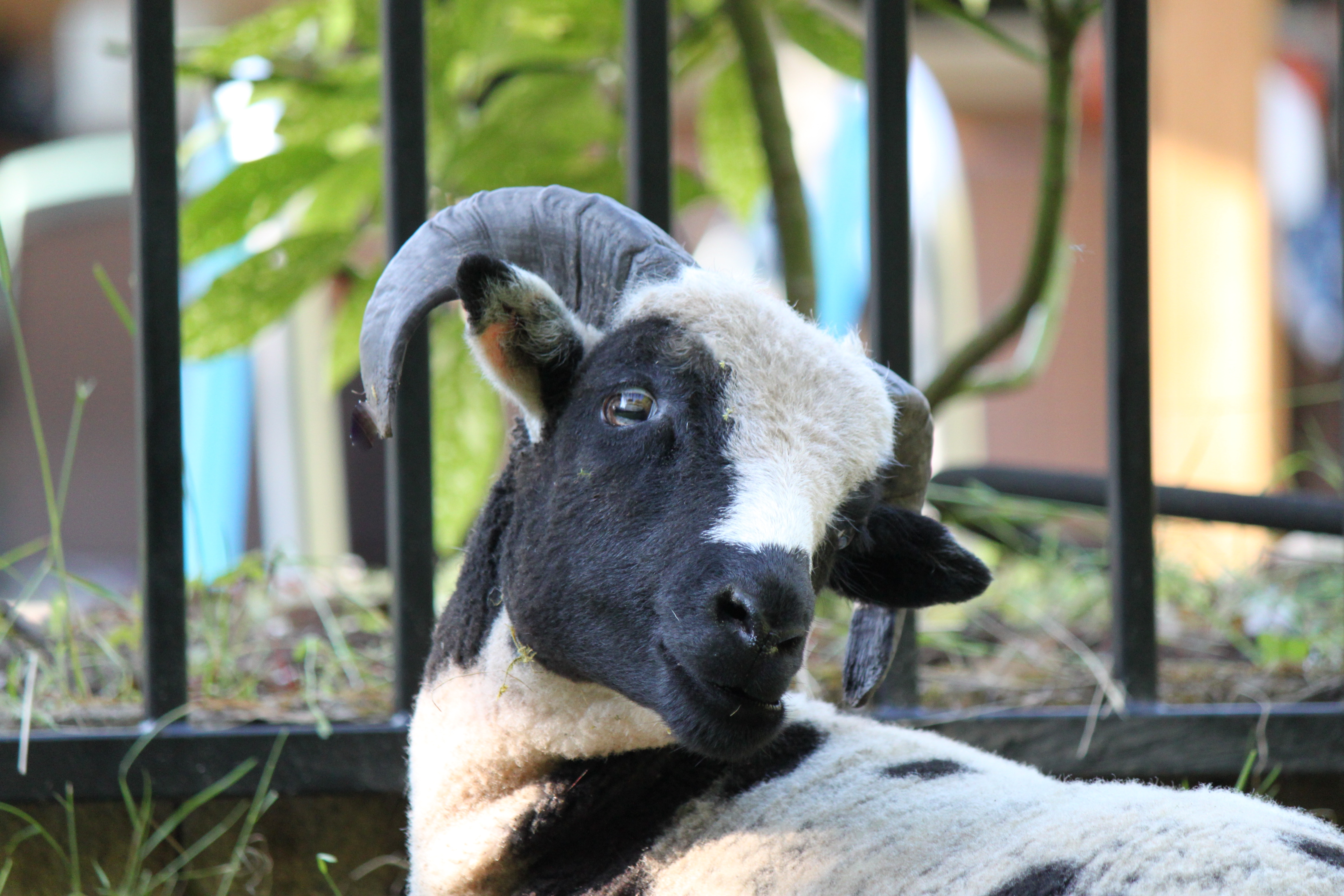
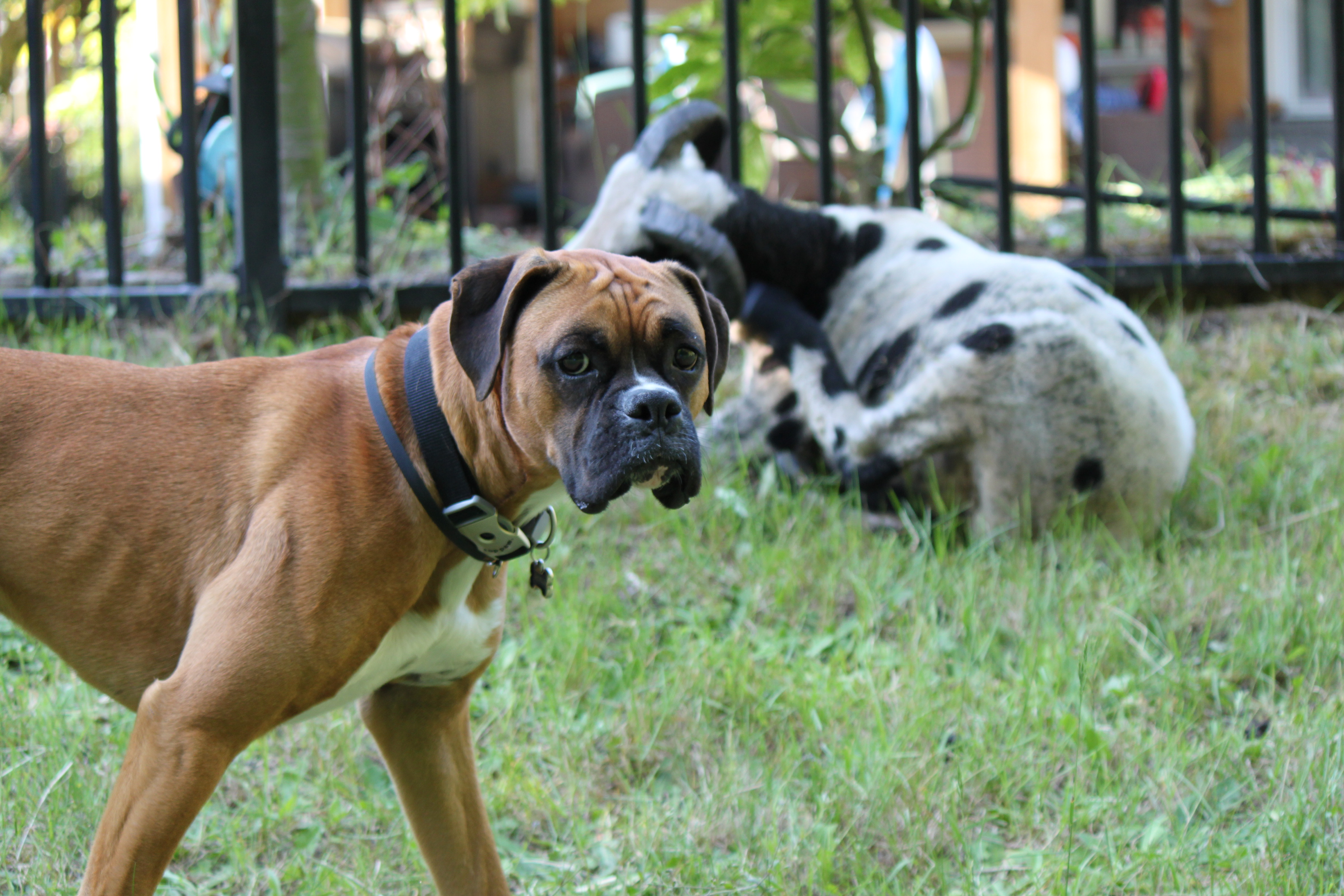
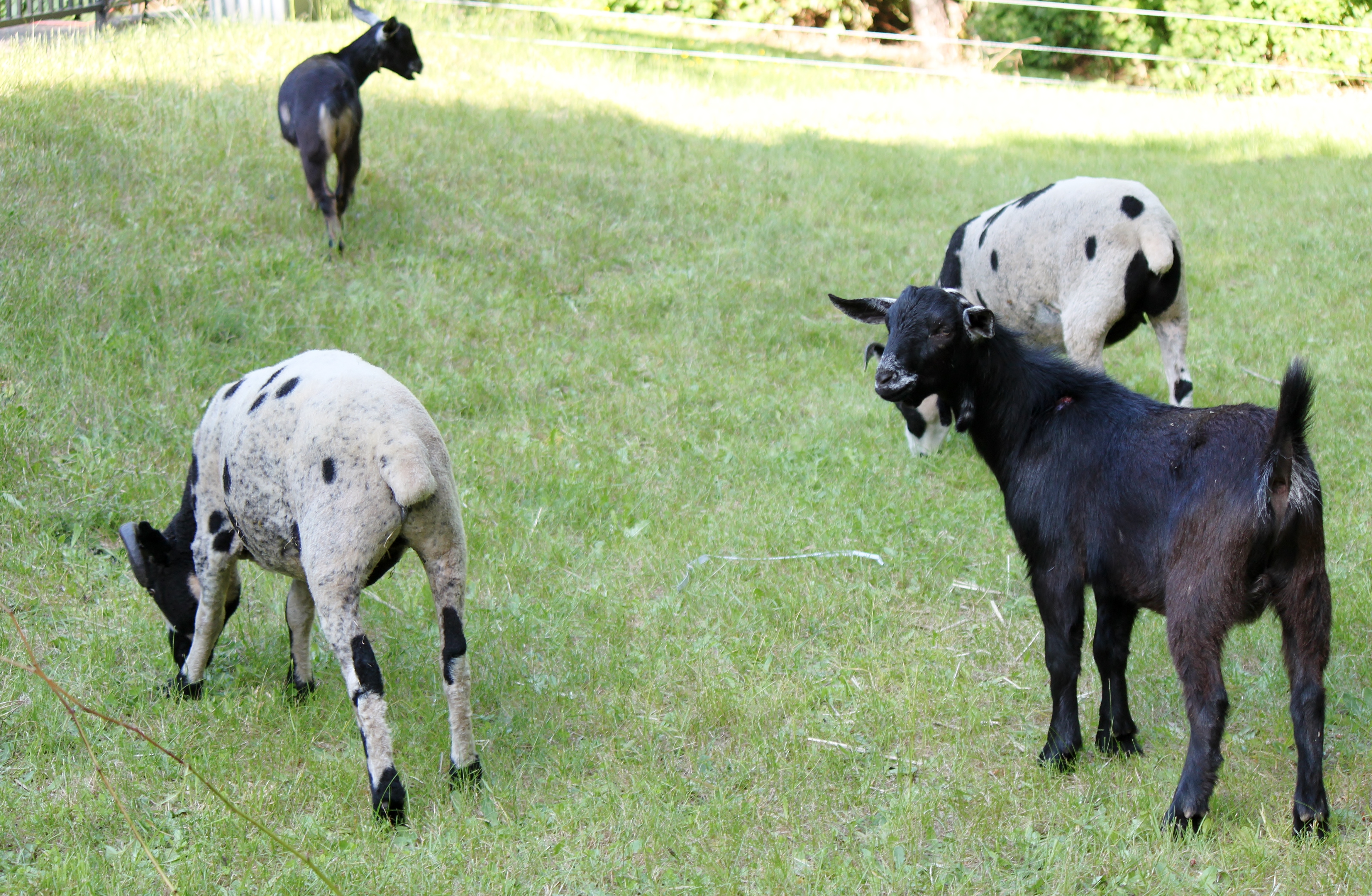
Last week the previous owners of Edmund and Lucy (our Jacob sheep which you can read about in previous posts,) contacted us and asked if we had room for their two Kinder goats. Seems the male goat missed his buddy, Edmund, and was making too much noise for the suburban neighborhood. $125 dollars later and the four, four legged friends are back together.
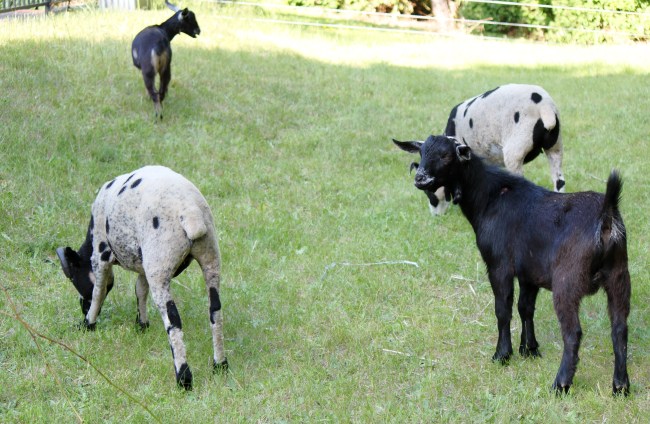
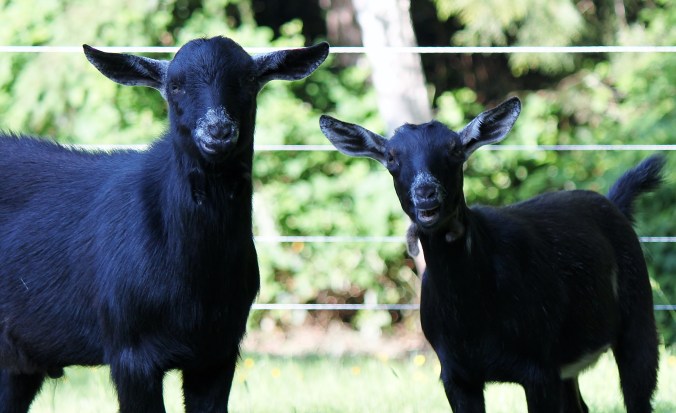
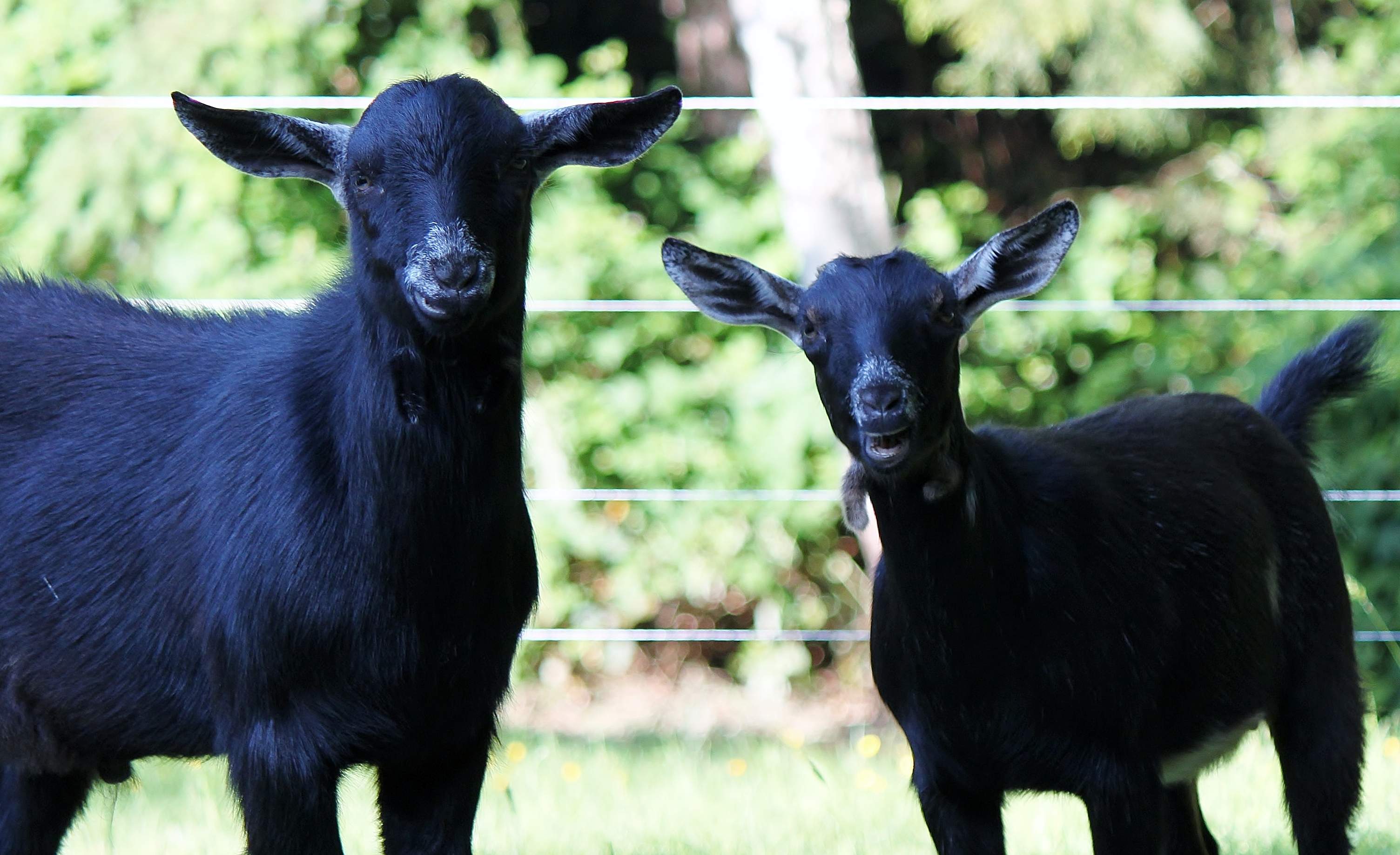
The new kids (get it?) on the pasture are named Sandy and Tumnus. Along with Lucy and Edmund we have some of the cast of Narnia. We’re missing Peter, of course, but I reckon that is a great name for a Idaho Pasture Pig. (On our wish list). In the meantime I call Tumnus, Tum-Tum. He likes it.
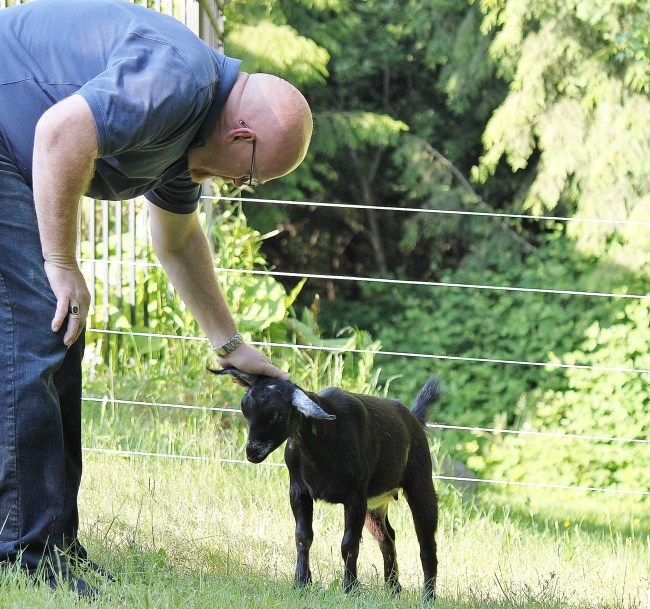
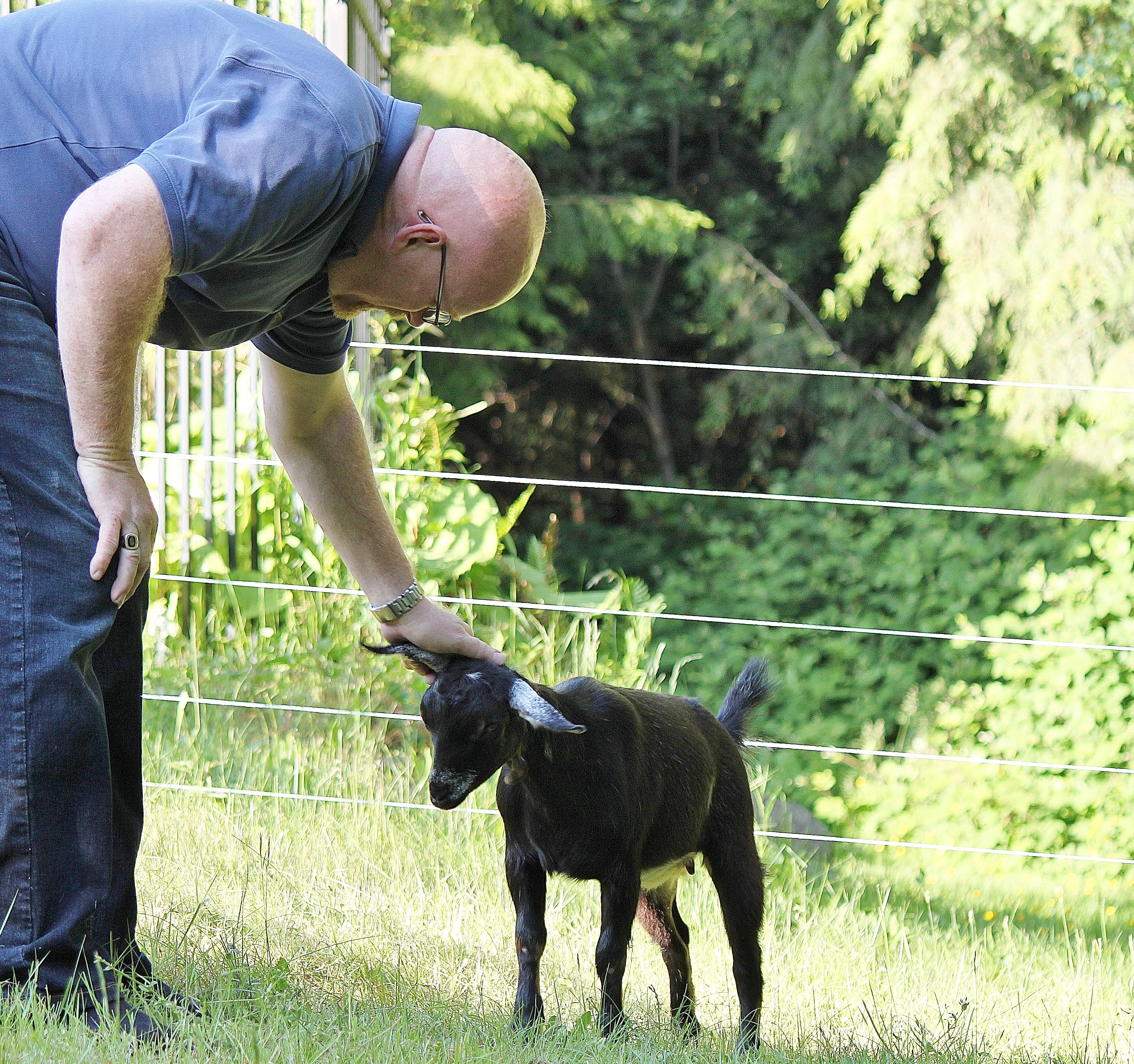
Last weekend we had some high school girls come and visit. Last time they were here we had only the two sheep. The sheep are shy and sort of sheepish (!). They don’t trust us too much. Never having owned sheep before I do not know if this is natural or learned behavior. When we went to the pasture to introduce the girls to the goats, the girls immediately identified how similar dogs and goats are to one another. An astute observation. Tum-Tum and Sandy have soft bleats and whenever they hear the back door open, or see us in the upper garden, they call out. My grandson Isaiah chuckles when they do because he thinks they’re saying, “Nana”, which of course is my name. If we go into the pasture Tum-Tum and Sandy run over to greet us. Sure, they probably think we have treats, but when they discover we don’t, they still stand there to receive many pats, and rubs and scratches on the top of their heads and under their chins. Pats on the rumps seem to be appreciated too.
I always thought, probably because of too much cartoon watching, that goats eat everything and are especially fond of tin cans. This is not true. At the feed store last week a customer complained about the last bale of hay she bought because she has picky eater goats and they didn’t like it. Huh? They’re goats. But, come to find out she was probably just slightly obsessive, because goats (and sheep) will pick through bales of hay and alfalfa to get their choicest bits and leave the rest. Also, unknown to me, (which is becoming a statement that does not need to be said because I knew a whole lot of nothing about farm livestock), is that there exist a fair amount of plants that are poisonous to both sheep and goats. There are also some herbs that are very beneficial to them. I printed this list and am trying to identify through pictures the bad stuff.
www.isfaxa.com Herbs a list of poisonous plants, and a few remedies for sheep that have eaten poisonous plants.
Poisonous Plants
Plants toxic to sheep include:
Acorns, Angel trumpet (all parts), Azalea (all parts), Bittersweet (leaves, fruit), Black Bryony, Bracken, Buckthorn (all parts), Caladium (all parts), Castor Bean (all parts), Chinese Lantern (all parts), Chrysanthemum (all parts), Creeping Charlie (all parts), Daffodil (bulb, Delphinium (all parts), English Ivy (all parts), Foxglove (leaf, seeds), Geranium (all parts), Gladiola (bulb), Hemlock (water dropwort), Holly (all parts), Horse Chestnut (flower, sprout, seeds),Horsetails, Hyacinth (bulb), Iris (all parts),Jerusalem Cherry (leaf, unripe fruit)
Laburnum, Lily of the Valley (all parts), Lupine, Mistletoe (all parts), Monkshood, Mushrooms (all parts), Narcissus (all parts), Nightshade (all parts), Oleander (all parts), Peony (roots), Philodendron, Potato (sprouts, vines, unripe tubers), Ragwort, Rhododendron
Rhubarb (leaf, roots), Green Hellebore, Stinking Hellebore, Sugar beet tops (FRESH), Trumpet Lily (all parts), Vinca Vine (all parts),
Wandering Jew (leaf).Yew (IMMEDIATELY toxic)
What to do if your sheep ingest a poisonous plant: Consult your vet.
One veterinarian advised the following for sheep who had eaten rhododendrons – 4 tablespoons Milk of Magnesia (laxative plus antacid); 1 teaspoon baking powder; 1 teaspoon powdered ginger. Dosage was 2 ounces given twice, 12 hours apart. Also
advised was to give them aspiring (3 per adult sheep)
Helpful Herbs (from www.lavenderfleece.com )
Alfalfa – Alfalfa contains large amounts of protein, minerals and vitamins; it is nervine and tonic and is an excellent kidney cleanser. Because alfalfa has roots that can go as deep as 125 ft., it brings up vital minerals not attainable by other vegetation. It is a rich source of vitamins A, C, E and K. It is a blood builder, good for teeth and bones, and excellent for milk producing animals.
Birch – Birch is useful in treating digestive ailments. The leaves are cleansing and will
expel worms.Carrots – Carrots are useful for eye disorders due to the carotene. They are good for all
animals, and help to expel worms.Comfrey – Comfrey is a large plant and sheep particularly relish the young shoots.Dandelion – Dandelion is blood-cleansing and tonic and helps cure jaundice. The
leaves strengthen tooth enamel and dandelion is an over-all good health conditioner.Dill – Dill increases milk yield and is a good treatment for digestive ailments.Fennel – Fennel increases milk yield and possesses antiseptic and tonic properties.
Garlic – Garlic is very well known for its medicinal purposes. Highly antiseptic, garlic is rich in sulfur and volatile oils. Garlic is one of the best wormers. Garlic helps immunize against infectious diseases and helps in treating fever, gastric disorders,
rheumatism and is affective against parasites such as ticks, lice and liver fluke. Garlic is also thought to increase the fertility of animals.Hops – Hop shoots are beloved of grazing animals and hops are a good conditioner,
being tonic and nervine. Also an antiseptic. Flowers are a milk stimulant.
Horehound – Horehound is best known as a cough remedy in the treatment of pneumonia, colds, and lung disorders. Lavender – Lavender is highly tonic, antiseptic, antifungal, antibacterial and gives a sweet flavor to milk and cheese. The whole plant is useful.
Lemon – Lemon is a good blood cleanser. Also good for fevers, diarrhea and worms and may be used externally for skin ailments, ringworm and mange and to cleanse sores. Add honey when using internally.Lemon Balm – Lemon balm is a good pasture plant as it promotes the flow of milk. Its good for retained afterbirth and uterine disorders.Marigold – Marigold is eagerly eaten by sheep and goats. It is a good heart medicine.Mint – Mint will decrease milk flow and would be good for ewes when weaning lambs.
Mulberry – Mulberry leaves and fruit are a good treatment for worms.Mustard – Mustard is a good natural dewormer
Parsley – Parsley improves milk yield and sheep love it. Parsley is rich in iron and copper and improves the blood. It contains vitamins A and B and is good in cases of rheumatism, arthritis, emaciation, acidosis and for diseases of the urinary tract.
Pumpkins – excellent for deworming sheep and a good source of vitamins.
Raspberry – Raspberry is well liked by sheep. It is especially good for pregnancy and
birthing. Also good for digestive ailments.Rosemary – Sheep love rosemary and it gives a fine flavor to the milk. It is both tonic
and antiseptic.Sunflowers – Sunflowers are rich in Viamins B (1), A, D and E.Thyme – Thyme is another milk tonic and the oil is a worm expellent. Turnips – Turnips are another good food source that helps in deworming sheep. Violet – Violet leaves are rich in Vitamin C and A. Watercress – Watercress has large quantities of vitamins A, B, C and B (2), as well as
iron, copper, magnesium, and calcium. It promotes strong bones and teeth and is good
for anemia. It increases milk yield. Yarrow – Sheep in particular will seek out the beneficial yarrow plant.
Wormwood – This very powerful herb is especially good as a dewormer, as is Southernwood.
As you can see that’s a lot of stuff to learn, which is why I printed the list.
Here is a similar list for goats. (There are many online, but this shortened list is of the common plants we might find in our yards. Taken from How To Protect Your Goats from Poisonous Plants for Dummies. Some of the common poisonous plants that might grow in your pasture or backyard include: Bracken fern, Buttercup, Common milkweed, Foxglove, Lantana, Locoweed, Poke weed, Spurge, St. John’s Wort, Water hemlock and poison hemlock, Cyanide-producing trees such as cherry, chokecherry, elderberry, and plum (especially the wilted leaves from these trees), Ponderosa pine, Yew, Azalea, Kale, Lily of the valley, Oleander, Poppy, Potato, Rhododendron. Rhubarb.
Becoming sheep and goat people a little earlier than we anticipated has forced our hand, it has also swooped the learning curve. We pray that the animals will be protected through our ignorance and eventually, we’ll all just get along. Maybe Edmund and Lucy will even let us pet them longer than their cursory hand check for treats.
On Baldwin Acres you’ll find life overflows with hard work, chaos, laughter, fatigue and always, always, blessings.
 this photo is not Baldwin Acres, it is the place we go Salmon fishing every summer, Sekui, Washington. But, this picture does show the gray mistiness that is the reality of our Autumn
 This is the girl’s place with the new extended chicken run and automatic water feeder. The extended light is where the nesting boxes are in the top enclosed area. We’d read during the summer we should use sand as flooring. So, we did. Now, I’m not sure if sand is a great idea in such a wet season because the chickens are mighty muddy. Thus the reason for adding six inches of pine shavings.


 Baldwin Acres